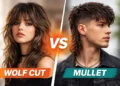


The Korean wolf cut has taken the global hair scene by storm. Blending the retro ’70s shag and ’90s mullet with the soft, face-framing layers typical of K-beauty, this hairstyle is one of the most versatile and gender-neutral looks ever created. Popular among K-pop idols, K-drama stars, and social media influencers, the cut has become a cultural statement — reflecting Korea’s modern approach to effortless yet meticulously designed beauty.
What Is a Korean Wolf Cut?
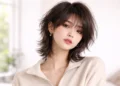
The Korean wolf cut is a modern interpretation of the traditional wolf cut hairstyle, but with a smoother and more balanced aesthetic. While the Western wolf cut often emphasises dramatic layers and volume at the crown, the Korean version focuses on soft transitions, blended texture, and natural movement.
It’s typically achieved by:
- Adding feathered layers around the face
- Keeping the ends slightly wispy or curved inward
- Creating volume at the crown while maintaining sleekness through the lengths
The result? A soft-edged, youthful look that flatters nearly every face shape.
The Origins and Cultural Influence
The term “wolf cut” first gained traction in Japan and Korea, before going viral on TikTok and Instagram. Its popularity skyrocketed when K-pop icons like Jennie Kim (BLACKPINK), Taehyung (BTS), and Yeji (ITZY) showcased their versions.
In Korea, hairstyling is deeply intertwined with fashion and self-expression. Salons in Seoul’s Gangnam District quickly adapted the Western wolf cut trend to suit Asian hair textures — typically thicker and straighter — resulting in a more controlled, layered silhouette.
Key Features of the Korean Wolf Cut
| Feature | Description |
|---|---|
| Soft Layers | Lightly feathered layers to add texture without harsh contrasts |
| Face-Framing Strands | Designed to contour cheekbones and jawlines |
| Natural Volume | Lift at the crown using subtle layering and blow-dry techniques |
| Wispy Bangs | Often paired with Korean see-through bangs or curtain bangs |
| Effortless Styling | Works well air-dried or with minimal heat tools |
This hairstyle is perfect for those who want a modern, low-maintenance look with editorial appeal.
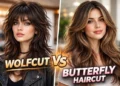
Korean Wolf Cut vs Classic Wolf Cut
While both share the same foundational idea — volume on top and layers through the bottom — the differences are subtle yet significant.
| Aspect | Korean Wolf Cut | Western Wolf Cut |
|---|---|---|
| Texture | Smooth, blended, natural | Shaggy, messy, voluminous |
| Layers | Fine, feathered | Chunky, disconnected |
| Finish | Polished yet casual | Edgy and rebellious |
| Styling | Minimal heat required | Often styled with texturising products |
| Audience | Gender-neutral, soft aesthetics | Youthful, alternative subcultures |
Styling Variations by Hair Type
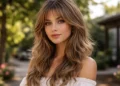
1. Korean Wolf Cut for Long Hair
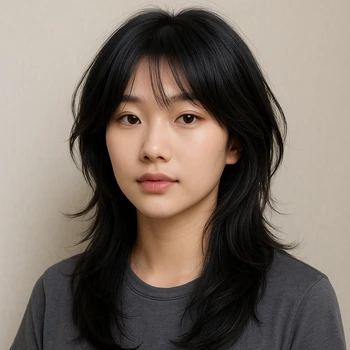
Long versions maintain the signature feathered layers while keeping length for elegance. They’re ideal for straight or wavy textures, creating a swaying, romantic movement. Add curtain bangs or wispy front layers for balance.
2. Korean Wolf Cut for Short Hair
Short styles resemble K-pop pixie-mullets, edgy yet soft. They highlight the jawline and work well with tapered ends or curled under tips. It’s perfect for round and oval face shapes.

Explore: wolf cut short hair
3. Korean Wolf Cut for Men
Among men, the Korean wolf cut male trend mixes masculine texture with boyish charm. It’s especially popular among BTS, Stray Kids, and TXT fans, where idols sport middle-parted fringes and windswept layers.

4. Korean Wolf Cut for Women
For women, the look is defined by soft femininity — slightly curved ends and airy bangs.
The cut frames the face beautifully, especially when combined with ash brown, honey blonde, or two-tone ombré hair colours.
5. Korean Wolf Cut for Curly or Wavy Hair
Although naturally straight hair dominates in Asia, curly Korean wolf cuts are gaining traction. Stylists use thinning shears to lighten bulk and define wave patterns while maintaining balance and softness.

Explore: wolf cut curly hair
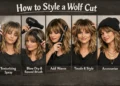
How to Style a Korean Wolf Cut
- Pre-Dry for Volume: Blow-dry the crown area using a round brush to create height.
- Add Texture: Use a texturising spray or sea salt mist to enhance definition.
- Shape the Ends: Curl the front layers slightly inward with a straightener for a polished K-drama effect.
- Maintain Airiness: Avoid heavy oils; instead, use a lightweight serum or mist.
- Regular Trims: Every 6–8 weeks to maintain soft layering and avoid bulk buildup.
Who Should Try the Korean Wolf Cut?
The cut suits almost everyone, but it’s particularly flattering for:
- Round or oval face shapes (creates illusion of length)
- Thick straight hair (adds lightness and movement)
- Fine or thin hair (creates natural volume)
- Those seeking a gender-neutral, trendy aesthetic
It’s an ideal choice for people who want effortless Korean fashion appeal without daily styling struggles.
Trending Korean Wolf Cut Colours and Enhancements
| Trend | Description |
|---|---|
| Ash Brown & Silver Blonde | Subtle hues that enhance Korean skin tones |
| Two-Tone Highlights | Contrasting under-layers inspired by idols like Karina (aespa) |
| Rose Gold Shades | Adds a warm, modern touch to soft layers |
| Gloss Treatments | Popular in Seoul salons for a glass-like shine |
Maintenance and Care Tips
- Use sulfate-free shampoo to preserve texture
- Apply leave-in conditioner for smoothness
- Avoid over-straightening; maintain natural bends
- Visit a Korean salon or stylist familiar with feather layering techniques
Korean Wolf Cut: A Global Trend Redefining Hair Culture
The Korean wolf cut is more than just a haircut — it’s a statement of individuality and modern expression.
It merges Western edginess with Eastern precision, offering a balanced style adaptable for every lifestyle. Whether worn by K-pop idols, fashion models, or everyday enthusiasts, it reflects the evolution of self-expression through hair.