
If you’ve recently had a wolf cut — or you’re planning one — you’ve probably noticed something quickly: the magic is in the styling. Many UK clients leave the salon loving the shape but struggle to recreate that airy, textured finish at home.
The good news is that learning how to style a wolf cut doesn’t require professional skills. As a general rule used by UK stylists, the key is simple: build lift at the crown, keep the ends light, and avoid heavy products that collapse the layers.
This beginner-friendly guide is based on common salon techniques used across the UK and works for most hair types.
Why Styling Matters for This Cut
Professional stylists across the UK consistently note that heavily layered cuts depend on daily styling to maintain shape. Without it, the crown can fall flat and the layers may look uneven.
The goal is not perfection — it’s controlled texture.
Tools and Products You’ll Need (UK-Friendly Picks)
You don’t need expensive salon tools. Most beginners in the UK can achieve excellent results with mid-range products widely available at Boots, Superdrug, or major online retailers.
Essential Styling Tools
Recommended basics:
- Hair dryer (1800–2200W for efficient drying)
- Medium round brush (£6–£12 typical UK price)
- Curling wand or straightener
- Diffuser attachment (for wavy or curly hair)
Practical tip: If buying one tool first, invest in a reliable dryer with a concentrator nozzle — it makes the biggest difference for crown volume.
Must-Have Styling Products
Lightweight formulas work best for wolf cuts.
- Heat protectant spray (£5–£10 UK average)
- Volumising mousse (£4–£8)
- Sea salt spray (£6–£12)
- Texturising spray (£8–£18)
- Dry shampoo for second-day lift
UK stylist insight: heavy oils and thick creams are the most common reason wolf cuts look flat at home.
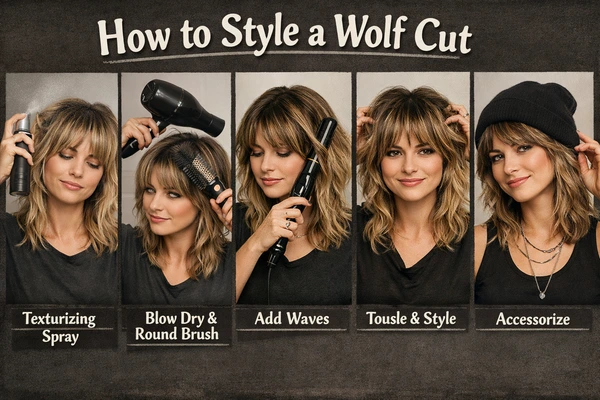
Step-by-Step — How to Style a Wolf Cut at Home
This routine reflects standard salon practice and is suitable for beginners.
Step 1 — Start With Damp Hair
After washing, gently towel-dry until hair is slightly damp.
Apply:
- Heat protectant (essential for any heat use)
- A golf-ball amount of volumising mousse at the roots
This creates the lift foundation.
Step 2 — Build Volume at the Crown
This is the most important stage.
Using your dryer:
- Tilt head slightly forward
- Lift roots with fingers or round brush
- Direct airflow at the crown
- Dry fringe forward, then sweep outward
Professional note: focus airflow at the roots — not the ends.
Step 3 — Shape the Layers
Once fully dry, define the ends.
With a curling wand
- Take small sections
- Curl ends away from the face
- Keep mid-lengths mostly straight
With a straightener
- Add a soft outward flick
- Avoid fully straightening the layers
This preserves the textured wolf cut silhouette.
Step 4 — Add Texture and Movement
Lightly mist either:
- Sea salt spray, or
- Texturising spray
Scrunch gently through mid-lengths and ends.
UK salon tip: start light — you can always add more product, but removing excess is difficult.
Step 5 — Lock in the Look
Finish with:
- Flexible hold hairspray, or
- A tiny amount of styling wax on the ends
The wolf cut should move naturally — avoid stiff finishes.
How to Style a Wolf Cut Without Heat
For those minimising heat damage, these methods are widely recommended by UK hair professionals.
Air-Dry Method
Best for naturally wavy textures.
- Apply mousse to damp hair
- Twist loose sections
- Air-dry fully
- Finish with texturising spray
Result: soft, lived-in texture.
Overnight Braiding Technique
A practical low-effort option.
- Create 2–4 loose braids on slightly damp hair
- Leave overnight
- Undo in the morning
- Add dry shampoo at the crown
This method is especially popular among UK students and busy professionals.
Styling a Wolf Cut by Hair Type
Different textures need small adjustments.
Straight Hair
Primary goal: create lift and movement.
Focus on:
- Strong root lift
- Light outward flicks
- Dry shampoo at the crown
Wavy Hair
You already have natural texture.
Best approach:
- Diffuse gently
- Enhance with sea salt spray
- Scrunch while drying
Curly Hair
Use a diffuser on low heat and speed.
Key tips:
- Apply curl cream first
- Diffuse upside down
- Avoid brushing dry curls
Fine vs Thick Hair
Fine hair
- Use lightweight mousse
- Prioritise root lift
- Avoid heavy sprays
Thick hair
- Use texturising spray
- Focus on separating layers
- Slightly more product may be needed
Common Wolf Cut Styling Mistakes to Avoid
Based on frequent feedback from UK salons:
- Over-straightening the layers
- Skipping crown volume
- Using heavy oils
- Applying too much hairspray
- Flattening the fringe
Most styling issues trace back to product weight or lack of root lift.
Quick 5-Minute Wolf Cut Routine
For busy mornings:
- Apply dry shampoo at roots
- Blast crown with dryer (60–90 seconds)
- Flick front layers with straightener
- Add light texturising spray
- Scrunch and go
This is typically enough for day-to-day wear.
How to Make Your Wolf Cut Last All Day (UK Weather Tips)
The UK’s humidity and drizzle can affect volume.
Best Finishing Products
Look for:
- Flexible hairspray
- Humidity-resistant texture spray
- Lightweight volumisers
Typical UK price range: £6–£18.
Refreshing Second-Day Hair
Quick refresh method:
- Dry shampoo at roots
- Light sea salt mist
- Quick crown blow-dry
This restores shape without full restyling.
Final Thoughts
Styling a wolf cut becomes straightforward once you understand the fundamentals: lift at the crown, light texture through the ends, and minimal heavy product. Start simple, adjust for your hair type, and you’ll quickly achieve that effortless, salon-inspired finish at home.
FAQs
Is a wolf cut hard to style for beginners?
No. Once you master root lift and light texturising, most people can style it in under 10 minutes.
Can I style a wolf cut without a curling wand?
Yes. A round-brush blow-dry, straightener flick, or overnight braids can all create the desired texture.
How do I stop my wolf cut going flat?
Focus on crown volume using mousse, proper blow-dry direction, and dry shampoo for maintenance.
Does a wolf cut suit thin hair?
Yes. When properly layered and styled with volumising products, it can make fine hair appear fuller.