
The wolf cut is bold, textured, and full of personality. It blends the best parts of a shag haircut with a soft mullet shape, using layers to create movement and volume. But while the cut looks effortless, it actually needs the right care to stay that way.
Many people love their wolf cut on day one, only to feel disappointed a few weeks later. The shape looks flat, the layers disappear, or the hair feels messy instead of stylish. In most cases, the problem isn’t the haircut itself — it’s the haircare routine.
Let’s look at the most common haircare mistakes that can ruin a wolf cut and how to avoid them.
Overwashing Your Hair
Washing your hair too often is one of the fastest ways to damage a wolf cut. This haircut relies on natural texture and movement, which comes from your hair’s own oils.
When you overwash, you strip away those natural oils. This leaves the hair dry, flat, and harder to style. The layers can start to look lifeless, especially around the crown.
A wolf cut usually looks best when washed two to three times a week. On non-wash days, a light dry shampoo can help refresh the roots without removing moisture.
Using Heavy or Wrong Hair Products
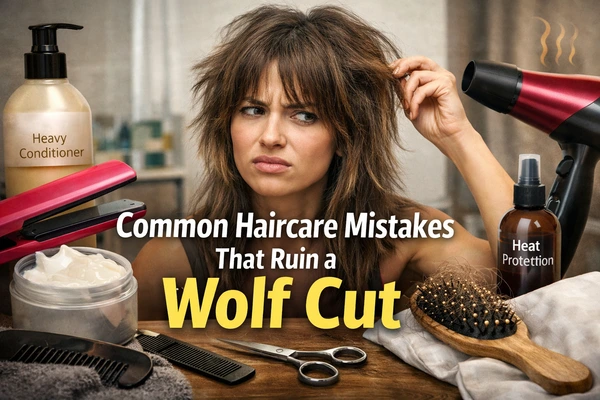
Many people use thick conditioners or heavy styling creams without realising how much damage they cause to layered hair. These products weigh the hair down and flatten the very layers that make a wolf cut special.
Product buildup is another issue. When residue collects on the scalp and hair, volume disappears, and the cut loses its shape.
Instead, choose lightweight products such as:
- Volumising shampoos
- Light leave-in conditioners
- Texture sprays or sea salt sprays
These help maintain movement without making the hair greasy or stiff.
Treating a Wolf Cut Like a Regular Haircut
A wolf cut is not a bob, a blunt cut, or a one-length style. Treating it like one often leads to styling mistakes that ruin its natural flow.
Brushing it flat, over-smoothing with a straightener, or forcing the hair into a neat shape removes texture and makes the cut look awkward. The beauty of a wolf cut is in its uneven layers and relaxed finish.
Instead of trying to control every strand, work with the cut. Use your fingers more than brushes and allow the layers to fall naturally.
Excessive Heat Styling Without Protection
Heat styling is not always bad, but using it too often — or without protection — can quickly damage a wolf cut. Heat damage affects layered hair faster because the ends are already lighter and more exposed.
Flat ironing removes movement, while incorrect blow-drying can create frizz or a flat crown. Over time, the layers lose definition, and the cut looks shapeless.
If you use heat:
- Always apply a heat protectant
- Keep tools on low to medium heat
- Use a diffuser when blow-drying to enhance texture
This helps protect hair elasticity and keeps the layers alive.
Skipping Regular Trims
Many people avoid trims because they want to grow their hair longer. However, skipping trims is one of the biggest reasons a wolf cut loses its structure.
As hair grows, layers become uneven and split ends appear. The cut starts to look messy rather than intentional.
A small trim every six to eight weeks helps:
- Maintain the shape
- Prevent split ends
- Keep layers balanced
You don’t need a full haircut — just light maintenance makes a big difference.
Ignoring Your Hair Texture
Not all wolf cuts behave the same. Straight, wavy, and curly hair each need a different care routine. One of the biggest mistakes is using the same products and techniques regardless of hair type.
Straight hair wolf cuts can lose volume if products are too heavy. Wavy hair needs moisture without frizz control going too far. Curly wolf cuts often suffer when curls are brushed dry or styled incorrectly.
Understanding your natural texture helps you protect the cut instead of fighting it.
Rough Daily Hair Habits
Small daily habits can slowly ruin a wolf cut without you realising it. Aggressive towel-drying, brushing dry layered hair, or sleeping on cotton pillowcases all cause friction and breakage.
Over time, this leads to frizz, damaged layers, and uneven texture.
Simple changes can help:
- Pat hair dry instead of rubbing
- Use a wide-tooth comb on damp hair
- Switch to a silk or satin pillowcase
These habits protect the shape and health of your haircut.
How to Fix a Ruined Wolf Cut
If your wolf cut already feels off, don’t panic. In many cases, it can be fixed without starting over.
Start by simplifying your routine and switching to lighter products. Reduce heat styling and let your natural texture show. A professional stylist can also refresh the layers with a small trim and guide you on proper maintenance.
With the right care, a wolf cut can quickly regain its volume, texture, and attitude.
Final Thoughts
A wolf cut is designed to look effortless, but it still needs thoughtful care. Most problems come from overwashing, heavy products, heat misuse, or ignoring natural texture.
When you protect the layers and work with your hair instead of against it, the wolf cut stays bold, stylish, and full of life. Treat it right, and it will reward you every single day.